Work That Outlasts the Campaign
The relationships and knowledge you build don't disappear when the election ends or the funding runs out. They stay with you, and with the network.

Every generation is presented with an opportunity to rethink how progress is made. For decades, community organizations have transformed neighborhoods by feeding families, mentoring youth, advocating for justice, mobilizing volunteers, supporting small businesses, strengthening civic engagement, and standing beside people during their greatest moments of need. Their work has changed countless lives, and their commitment to serving others has never been in question.
Yet despite that commitment, much of this work continues to happen in isolation. Across the country, organizations are solving the same problems, pursuing the same funding, recruiting from the same volunteer pools, and learning many of the same lessons without ever having the opportunity to learn from one another. The result is not a lack of effort or passion. The result is that communities receive less than what is truly possible because the people capable of creating extraordinary impact often remain disconnected from one another.
The future of community organizing is not about creating more organizations. It is about creating stronger relationships between the organizations that already exist. It is about replacing silos with collaboration, competition with partnership, and isolated success with collective impact. That future begins when we recognize that the greatest resource we possess is not funding, technology, or influence, it is each other.
That is why The Angel Table exists.

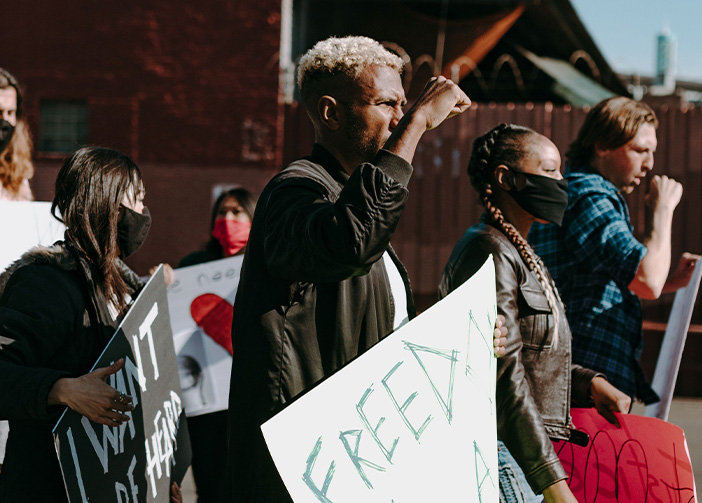

Most organizers are stretched thin, unaware the group down the street fights the same battle alone. Connected organizers win grants jointly, share back-office functions, and pool volunteers. The overhead that once weighed each group down gets lighter because it's shared.

A single voice is easy to overlook, and organizers often unknowingly work against each other, diluting their own impact. Connected organizers turn that around: a shared campaign becomes one unmistakable message, amplifying everyone instead of drowning each other out.
Become a Founding Member
People in need rarely have just one problem, and disconnected services mean they fall through the cracks. Connected organizers fix this with shared referral networks, catching gaps they didn't know existed and building a real continuum of care.
Every movement that changed an industry had one thing in common: a backbone. Not a hero, not a hierarchy, but an infrastructure that made sure no one had to carry the work alone. The Angel Table is that infrastructure for community organizations. all contribute valuable knowledge and experience.
It starts with a connection you didn't know you were missing. Right now, a mother walks into a food pantry every week. The staff knows her, knows her kids, knows she's struggling. What they don't know is that three blocks away, a workforce program has an opening that could change her situation entirely, because nothing connects the two organizations. The Angel Table closes that gap. The food pantry sees the workforce program and makes a warm handoff instead of a shrug. The workforce program sees the food pantry and refers clients back who need food support during training. Both organizations serve the same person better, and both gain a pipeline of new clients they never had to market for.
From there, that same connection becomes leverage. Organizations that once applied for grants alone now co-apply, and win funding that required a partnership neither had on their own. Organizations that once paid full price for HR, data systems, or back-office support now split the cost with a trusted partner doing the same work down the street. Organizations that once sent out a single, easily ignored press release now align with nine others, so policymakers hear one message instead of ten faint ones. And organizations that once lost people between disconnected programs now build the referral pathways that keep them moving forward instead of falling through. It is the infrastructure our sector has needed for decades, and it starts with the founding organizations willing to build it first.
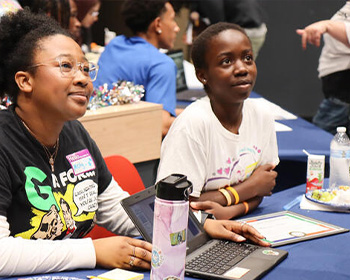

The partner who solves your exact problem is already in the network, waiting to be found.
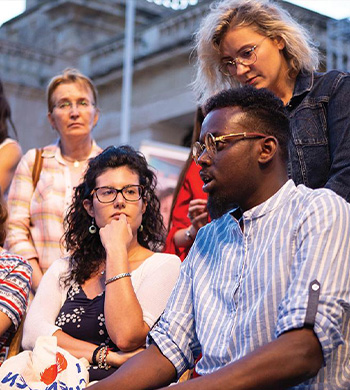
Growth happens faster when leaders facing the same challenges finally learn from each other.
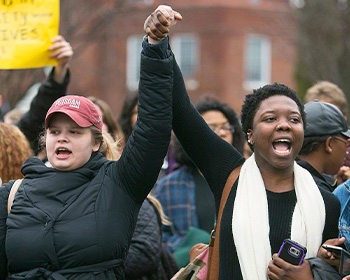
The funding that changes everything is easier to win when organizations apply together as one.
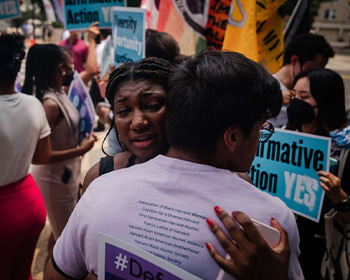
Every organization stretches further when the tools, training, and technology are finally shared.
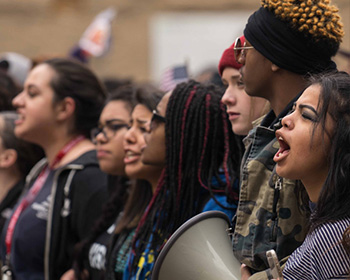
The priorities that matter most get heard when every voice in the room rises together.
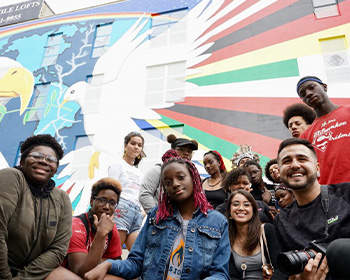
The relationships that carry the whole network forward start the moment everyone's in one room.
The relationships and knowledge you build don't disappear when the election ends or the funding runs out. They stay with you, and with the network.
Stop rebuilding trust from zero every election. The partners and contacts you earn become permanent, not something you lose the day the campaign office closes.
You're not temporary labor. This is the path that turns door-knocking into a profession, with training, recognition, and a future attached to it.
Imagine if every canvasser and organizer stopped starting from scratch every election cycle. Imagine if the outreach strategies, the volunteer tactics, the funding wins, and the hard-won lessons of the organizer down the street were as available to you as your own, so the next door you knock on isn't the first time anyone's tried to solve that problem.
When organizers stop guarding what works and start sharing it, you don't just work harder, you win faster, with less trial and error standing between you and the people you're trying to reach. You stop being the only person doing this work in your city and become part of a real network of organizers and canvassers doing it together, in real time.
And none of it disappears when the campaign ends. The relationships you build, the trust you earn, the knowledge you carry, all of it stays with you and with the network, instead of walking out the door with you or resetting from zero next election cycle. What you learn at the door is worth more than a stipend and a season. It's worth training, recognition, and a career, the kind that turns canvassing into a profession instead of temporary labor, with credit that stays attached to your name long after the grant cycle ends.
The next breakthrough in community organizing will not come from one organizer working harder alone. It will come from thousands of organizers finally working together, and staying together, long past the moment anyone was watching. That's not a new idea, it's the same principle behind every movement and coalition that ever outlasted a single election cycle. Collaboration isn't idealistic. It's the most proven strategy there is for turning individual effort into work that actually lasts.
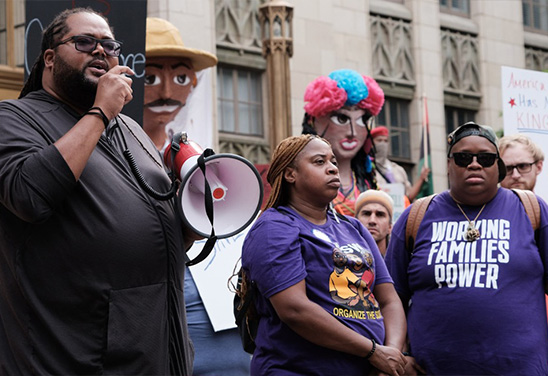
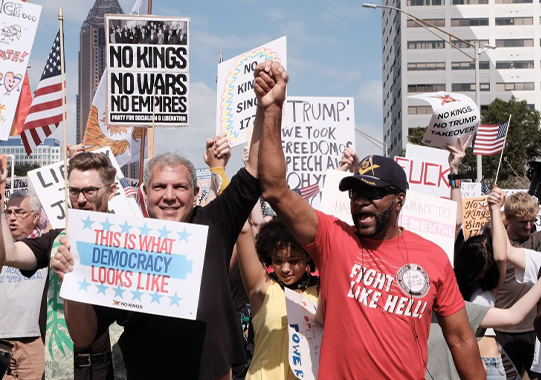
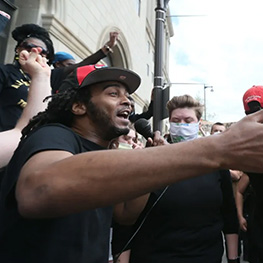
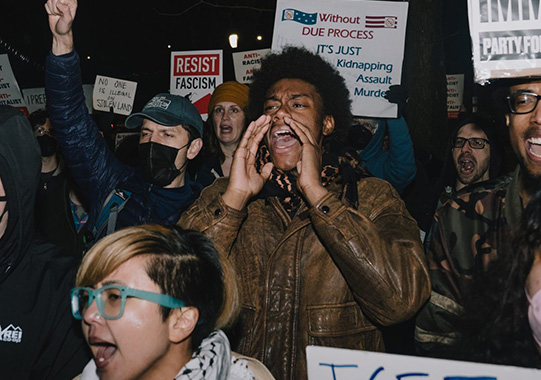
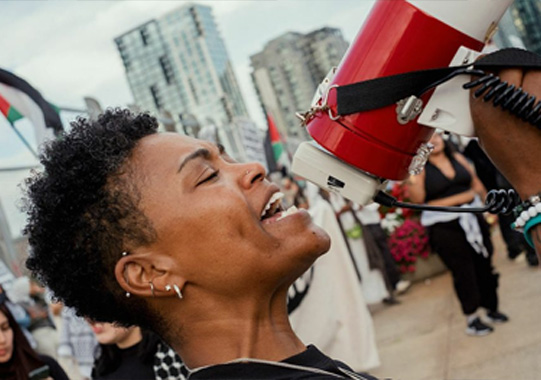



A Letter to the Organizer Who Hasn't Met Us Yet
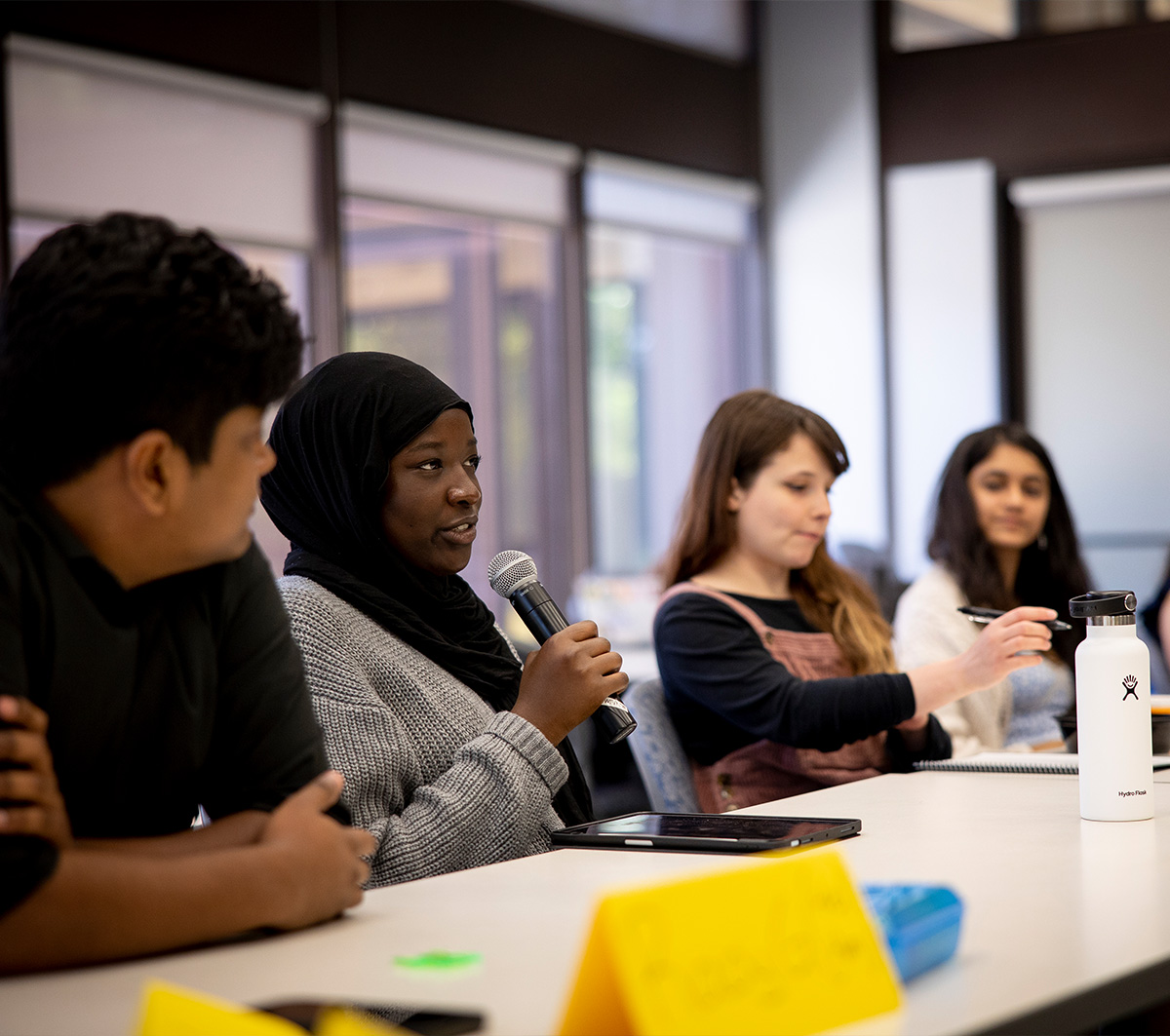
There's a version of you right now who thinks this fight is yours alone to carry. Who's up too late again, doing the work of five people, wondering if anyone out there is actually fighting for the same thing you are. We need you to know something before you go any further.You are not the first person to feel that alone. And every time in history someone finally put that feeling down, something happened that isolation could never have done by itself.
In late 1962, A. Philip Randolph proposed a march on Washington, and almost nobody answered him. Not because the idea was wrong, but because every civil rights organization in the country had its own agenda, its own funding to protect, its own place in the press to defend. Six leaders, each one certain his organization's approach was the right one, had every reason to stay six separate movements. Some of them didn't fully trust each other. Some of them disagreed, right up to the final hours, about how hard to push and what could safely be said out loud. The night before the march, a twenty-three-year-old named John Lewis stood in a room with Randolph, Bayard Rustin, and Martin Luther King, arguing over his own speech, being asked to soften language he believed with his whole chest. He gave in. Not because he stopped believing it, but because he understood something bigger was standing in that room with them. The next morning, six organizations that could have held six separate rallies in six separate cities stood on one stage instead. A quarter million people came, not because any one of those six was large enough to pull that many people alone, but because none of them tried to. That day didn't happen because everyone agreed. It happened because they built the table anyway, disagreements and all, and stood at it together.
Two years later, a Filipino farmworker named Larry Itliong knew a version of that same choice. His people had been walking off the fields in Delano, and the growers had a plan for that: bring in Mexican workers to break the strike, the same way Filipino workers had been used to break strikes before. Divide them, and neither side wins. Itliong could have stayed inside that division. Instead, he walked over to Cesar Chavez, whose union was mostly Mexican-American, and asked him to join a fight that wasn't technically his. A week later, two communities the growers had spent years keeping apart were picketing the same fields under the same word. Huelga. A year after that, they weren't two unions anymore. They were one. And together they won the first real contract American farmworkers had ever seen.
Two decades before either of those days, in a Chicago neighborhood in 1940, a different kind of table got built. Not one big organization trying to save everyone, but a network, congregations and civic groups who'd never worked together before, learning each other's names, sharing what each one had. Decades later, that same network is still standing. It backed the church-based coalition that passed the first living wage law in the country. It helped build the case for universal health care in another state entirely. And in one Brooklyn neighborhood, dozens of those churches, none of them big enough to do it alone, built more than five thousand homes and apartments. You can go stand in that neighborhood today. That's not a legend. That's a street address.
Here's what we need you to understand about all three of those stories. None of the people in them knew, in the moment, that they were making history. Lewis didn't know his softened speech would still be studied sixty years later. Itliong didn't know the union he built would still matter. The organizer who knocked on that first congregation's door in Chicago didn't know it would still be standing today. They just knew they were tired of being alone, and they did the one brave thing available to them: they reached toward someone else instead of staying inside their own four walls, even when it cost them something to do it.
That's the only thing being asked of you right now. Not a march. Not a merger. Just this: stop pretending you can do it alone. Somewhere within a few miles of you, there's an organizer running the exact canvass you're running, competing for the exact twelve volunteers you're competing for, starting from the exact blank page you started from, chasing the exact grant you keep almost winning, and just as burned out and just as broke as you are. She doesn't know your name yet. You don't know hers. But the moment you two stop being strangers, the volunteer pool that felt thin turns out to have been full the whole time. The systems you've been building from scratch, she already built. The funding readiness you've never had time to develop, the network already has. The proof that your work is actually working, the kind that used to feel impossible to gather alone, becomes something you build together instead. That's the same moment Lewis handed his speech over for the sake of something bigger, the same moment Itliong walked toward Chavez, the same moment a handful of congregations became a network that's still winning decades later.
History was never made by the people who stayed inside their own isolation, protecting what little they had. It was made by the ones who pulled up a chair at a table that wasn't finished yet, even when it meant giving something up to sit there, and helped finish it. The Angel Table takes its shape from the oldest symbol of that idea we have: the Round Table. No head. No single direction the power could flow. Every seat equal, because every person carried something the rest of the table needed.
Your seat is ready at the table built for you. Join the Table, The Angel Table.
Technology, AI, donors, and volunteers are raising the bar for collaboration. The future will belong to those who learn together.
Why Now? Why Us?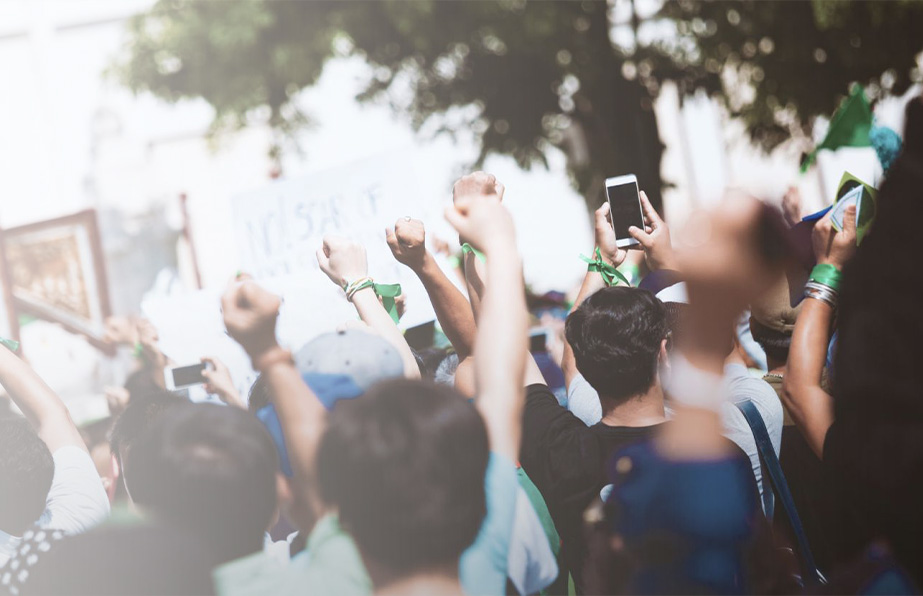
The world organizers were trained to work in doesn't exist anymore. A canvasser used to walk a list built from a paper file. Now the data moves in real time, and the organization without access to it is already behind before the first door. A grant used to take a phone call and a handshake. Now it takes dashboards, outcome tracking, and proof most small organizations were never given the tools to produce. Technology and AI are moving faster than any single organization's budget for keeping up with them..
Donors have noticed the duplication, and they're done funding it twice. They want to see organizations move together, not file the same request from six different desks. Volunteers have more places to give their time than they've ever had, and the organizations keeping them are the ones making that time feel connected to something larger than one program.
Technology, AI, donors, and volunteers are all raising the same bar at once, and no organization was built to clear it alone. The organizations that thrive over the next decade won't be the ones with the biggest budget. They'll be the ones that treated collaboration as infrastructure instead of an occasional favor, learning faster because they're learning together, building on what already works instead of starting over every time the landscape shifts again.
There has never been a more important moment to build the relationships that will define the next generation of community leadership.
Meaningful partnerships begin with conversations, trust, and shared purpose.
Read The Vision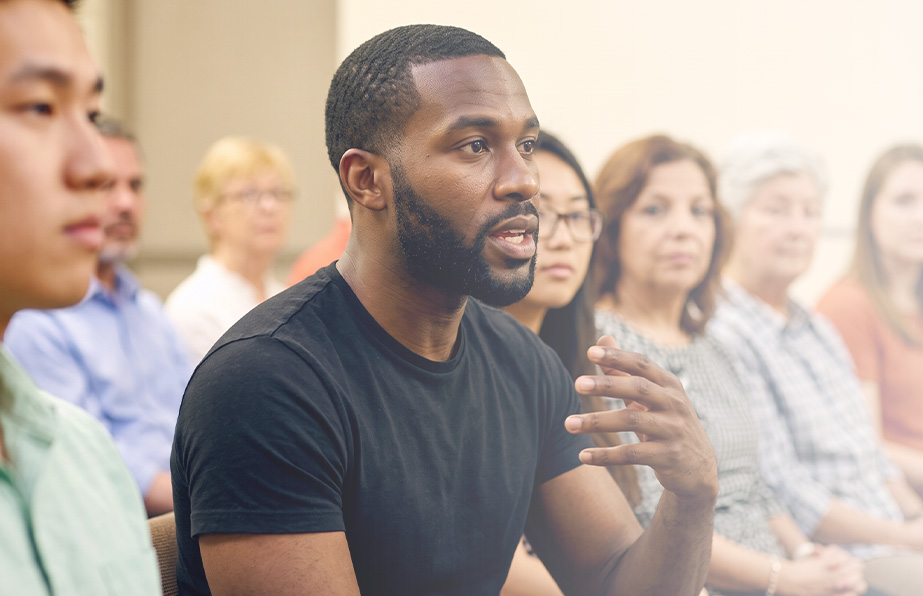
The most meaningful partnerships rarely begin with formal agreements. They begin with conversations, trust, shared purpose, and a willingness to solve problems together. Unfortunately, those opportunities are often left to chance. Too many organizations spend years searching for partners they should have met long ago.
The Angel Table changes that by intentionally bringing together people who share a commitment to creating stronger communities. Members don't simply exchange contact information, they exchange knowledge, experience, opportunities, introductions, resources, and ideas that create lasting value. Every conversation has the potential to strengthen an organization. Every relationship has the potential to improve a neighborhood. Every collaboration has the potential to transform lives.
The value of The Angel Table is measured not by the size of its membership but by the strength of the partnerships it creates and the impact those partnerships have on the communities we all serve.
Imagine an organizer anywhere, in any city, with immediate access to the collective experience of thousands of community leaders who've already solved her exact problem, and the technology and data tools to prove her impact the moment a funder asks. Imagine organizations that stop duplicating effort because they can build on what already worked somewhere else, cutting years off the path from idea to outcome. Imagine businesses, nonprofits, researchers, educators, government leaders, faith communities, volunteers, and philanthropists working as one connected ecosystem instead of isolated groups running parallel missions toward the same goal, each one moving faster because none of them are moving alone.
That future is possible, but it will not happen on its own. It will be built by leaders willing to share what they know, organizations willing to collaborate beyond their own walls, and communities willing to work differently than they have before. Every organization that joins gains more than a network: faster access to what works, less time rebuilding what already exists, and a stronger case for the funding, technology, and partnerships that used to take years to find alone. The Angel Table exists to build that future, not for one organization, but for every organization committed to lasting community impact.
And that future isn't just about building better organizations. It's about building a better ecosystem around them, one equipped to keep up with how quickly the work itself is changing.
Healthy ecosystems don't run on uniformity. They run on interdependence, every participant playing a role only they can play. Some organizations organize. Others educate. Some advocate. Others fund. Some innovate. Others build the relationships that make the rest of it possible. None of these roles outranks another, because none of them can do what the others do.
When an organization stays focused on its own strength and trusts the rest of the ecosystem to hold theirs, everyone gets stronger, and everyone gets faster. Communities get more complete solutions, not because one organization got bigger, but because every organization got to do what it already does best, backed by the expertise, technology, and resources of everyone around it. In a landscape where donors expect coordination instead of duplication, and where the tools of the work itself are evolving faster than any single budget can keep pace with, that speed isn't a bonus. It's what determines who's still standing, and still funded, in five years.
That's the whole difference. Resilient ecosystems were never built through sameness. They were built through everyone finally trusting each other enough to specialize, and moving fast enough, together, to meet a future that isn't waiting for anyone to catch up alone.